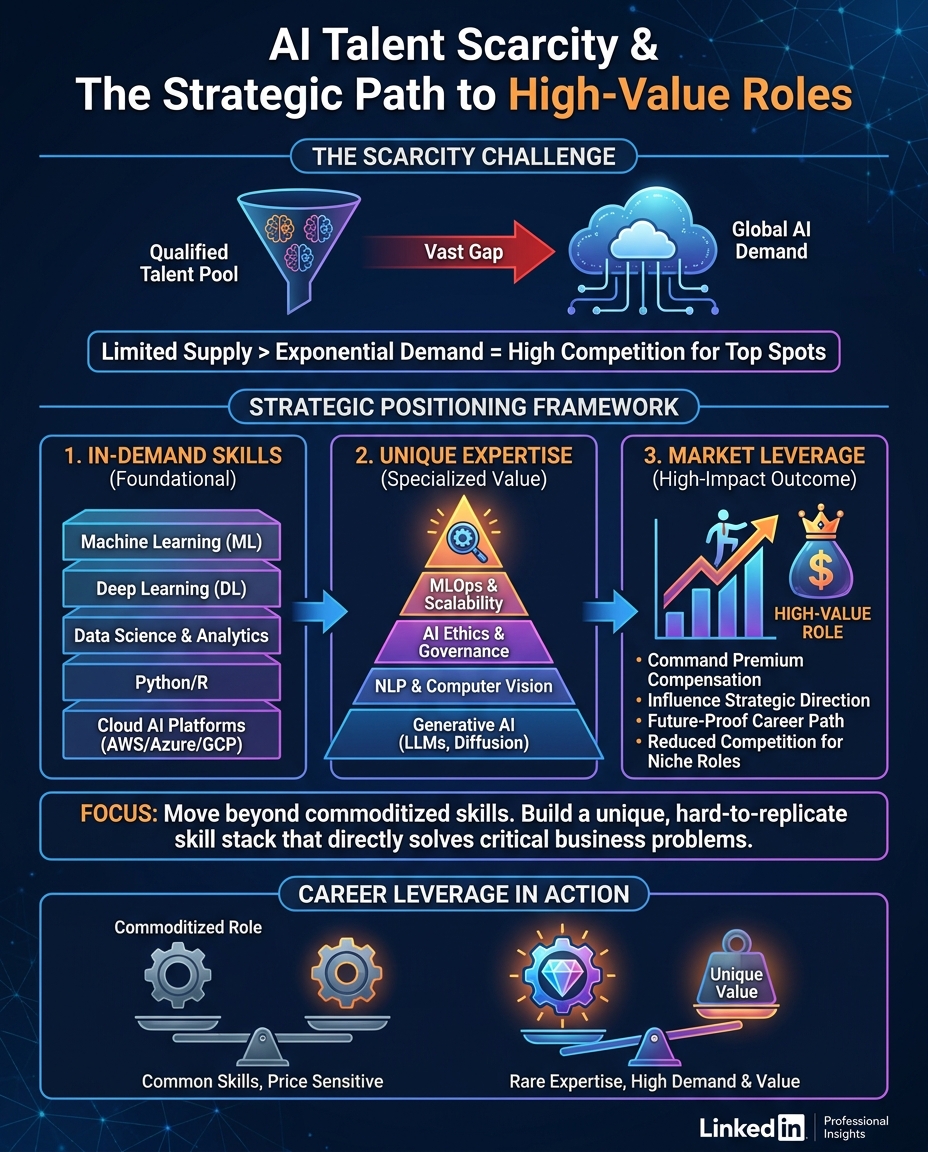
The market is screaming about a shortage of AI talent. But the noise is masking the real signal. The scarcity isn't in Python coders or TensorFlow jockeys. It's in the architects of agentic workflows, the builders of co-intelligent systems, and the strategists who can deploy fleets of AI agents to solve real-world business problems. This is the new 1%, and the opportunities aren't just six figures; they're seven.
The real scarcity is in the people who can build, deploy, and manage systems like the OpenClaw fleet. It's not about fine-tuning a model; it's about orchestrating a symphony of agents. It's about building durable, long-term memory systems like OB1, and simulating complex agent interactions in environments like AgentSim. These are the skills that command a premium because they deliver compounding value, not just one-off models.
Byron's work with Moltbook, for example, isn't just a project; it's a statement about where the industry is going. It's about creating a new paradigm for how we interact with and build upon large language models. The Spires project is another example of building the infrastructure for the next generation of AI applications.
This is where Byron is uniquely positioned. The OpenClaw fleet isn't a theoretical concept; it's a living, breathing ecosystem of agents that are solving real problems today. This is the kind of experience that can't be learned in a classroom or from a textbook. It's forged in the fire of real-world deployment.
Related Reading: Beyond Fine-Tuning: Are You Renting or Owning Your AI's Context?